
The human touch in an AI world
By Malcolm Birks | 07.05.26
We cannot escape the influence of artificial intelligence in architectural practice. From the regeneration of Leeds, to ambitious proposals reshaping Bradford, AI is beginning to leave its mark on the way we plan, design and deliver the built environment.


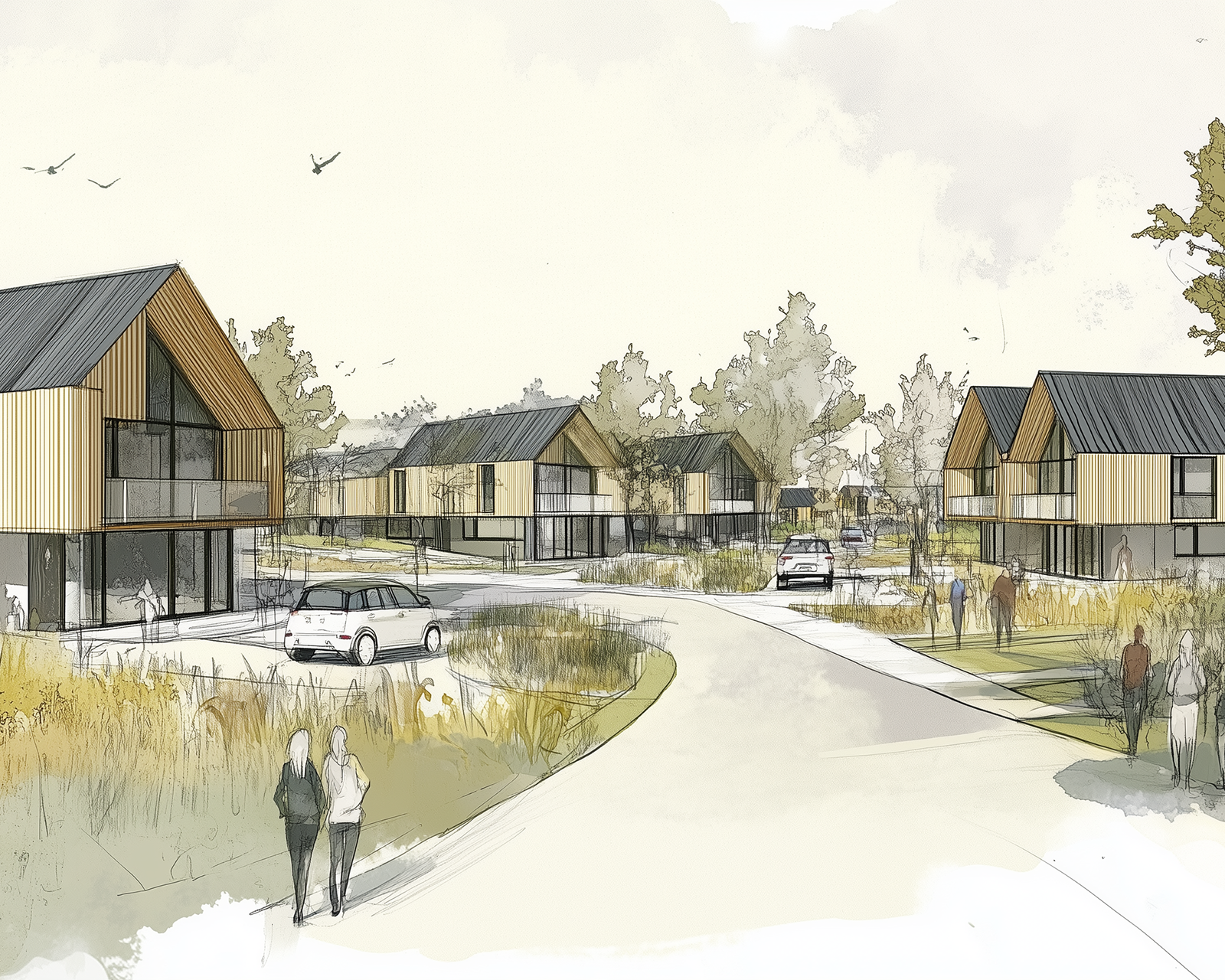
Councils and consultants are exploring how AI can speed up decision-making, improve efficiency and unlock new creative possibilities. But as the technology gathers pace, what does it mean for the architects, planners and place-makers shaping our region? And where does human judgment still hold firm when considering how communities live now and in the future?
Architect Keir Regan-Alexander asks us to imagine we have a co-worker in a glass office. They have a desk of a set size, they are highly efficient and resourceful but, in some ways, woefully inadequate. For them to deliver what you need, you must be very careful about what you put on their desk and the instructions you give them, and you need to check carefully when they are finished. This is your AI agent of today.
AI is presenting a significant challenge for consultants across the world, and architects are no different. It is now possible to generate beautifully-rendered 3d imagery of buildings with a few word prompts. We can now automate the production of housing layouts and building plans using AI, and a whole array of detailed schedules and costings can be derived quite quickly at the click of a mouse. An array of programmes, apps, plug-ins now allow bespoke solutions, and through ‘vibe-coding’ you can create your own in an afternoon.
As someone who trained with ink pens and a drawing board, it can feel like a bewildering landscape, and it is tempting to hide away amidst this revolution. But that would be to miss the opportunity to harness the very real possibilities of AI, when accompanied by human intelligence, judgement, direction and critically humanity.
AI tools present huge opportunities for efficiencies, new design exploration and form-making and greater rigour, analysis and testing. But value is still to be found in human expertise, direction and accountability. As well as the vital need for human judgment and direction, in the world of construction, there is also a need for a person to take ultimate responsibility for the design of buildings. AI brings benefits, but those benefits are only fully realised when coupled with the retention of some human sensibilities.
In terms of the co-worker in their glass office, it really matters what you put on their desk, and to check their work at the end. By being precise in your instructions, you can reap the benefits of their incredible resourcefulness. But you also need to check for the gremlins, built-in bias and discrepancies. This is the art of bookending - where the architect needs to be scrupulous and use expert judgment in what they put on the table and what they take off it.
As Yorkshire’s built environment continues to evolve, the question is not whether AI will shape our places and buildings, but how we guide it. AI is the latest tool in the box. For millennia, men and women have reached into their toolset, they have selected and directed, and they have taken a leap of imagination founded on human curiosity and invention. As we learn to use this new tool properly, we can have the best of both worlds.
Malcolm Birks is Head of Design at Rural Solutions.
This article was originally published in the Yorkshire Post Property Pages on 2nd May 2026
You might also be interested in...





We are using cookies to give you the best experience on our website. You can find out more about which cookies we are using on our cookie policy.